Exercise after c section starts gently and builds in phases. Begin with breathing, short walks, and pelvic floor work in the first days if cleared. Add low-impact training once your doctor signs off at six to eight weeks, and save high-impact work for around twelve weeks, always guided by symptoms.
Why Exercise After C Section Deserves Its Own Plan
Your incision still feels tight when you laugh. Your sleep is broken in two-hour chunks. And somewhere, an app is cheerfully telling you to bounce back. Ignore it. A C section is major abdominal surgery, and exercise after c section only works when you actually respect what your body just went through.
Here’s what happened in that operating room. The surgeon opened your abdominal wall, your uterus, and your skin, then stitched each layer back up separately. Both the visible scar and the deeper tissue need time. That’s why a phased, symptom-led return always beats any fixed date on the calendar.
- Treat the first six weeks as healing, not training. Your only job right now is to recover.
- Get explicit clearance from your obstetrician before any structured session. That usually happens at the six to eight week check, so plan around it.
- Progress by symptoms, not dates. No pain, no bleeding, and no pelvic heaviness means you’ve earned the next step.
- The deeper tissue, things like fascia and the uterine wall, heals slower than the skin you can actually see. A clean-looking scar doesn’t mean everything underneath is ready.
Get this foundation right and everything after it gets easier. Rush it, and you risk setbacks that cost you months, not days. When you’re ready to move forward, a female personal trainer in Dubai with postnatal experience can help you progress safely through every phase.
The First Days: Gentle Movement That Actually Helps
You can start moving sooner than you think. But moving here means the gentlest things imaginable. In the first 24 to 48 hours, assuming there are no complications, small movements actually protect you from clots and stiffness. Your body wants to move. Just not very much yet.
- Do ankle pumps and slow diaphragmatic breathing every hour or so while you’re resting. You can do this in bed, in hospital, anywhere. Simple, but it works.
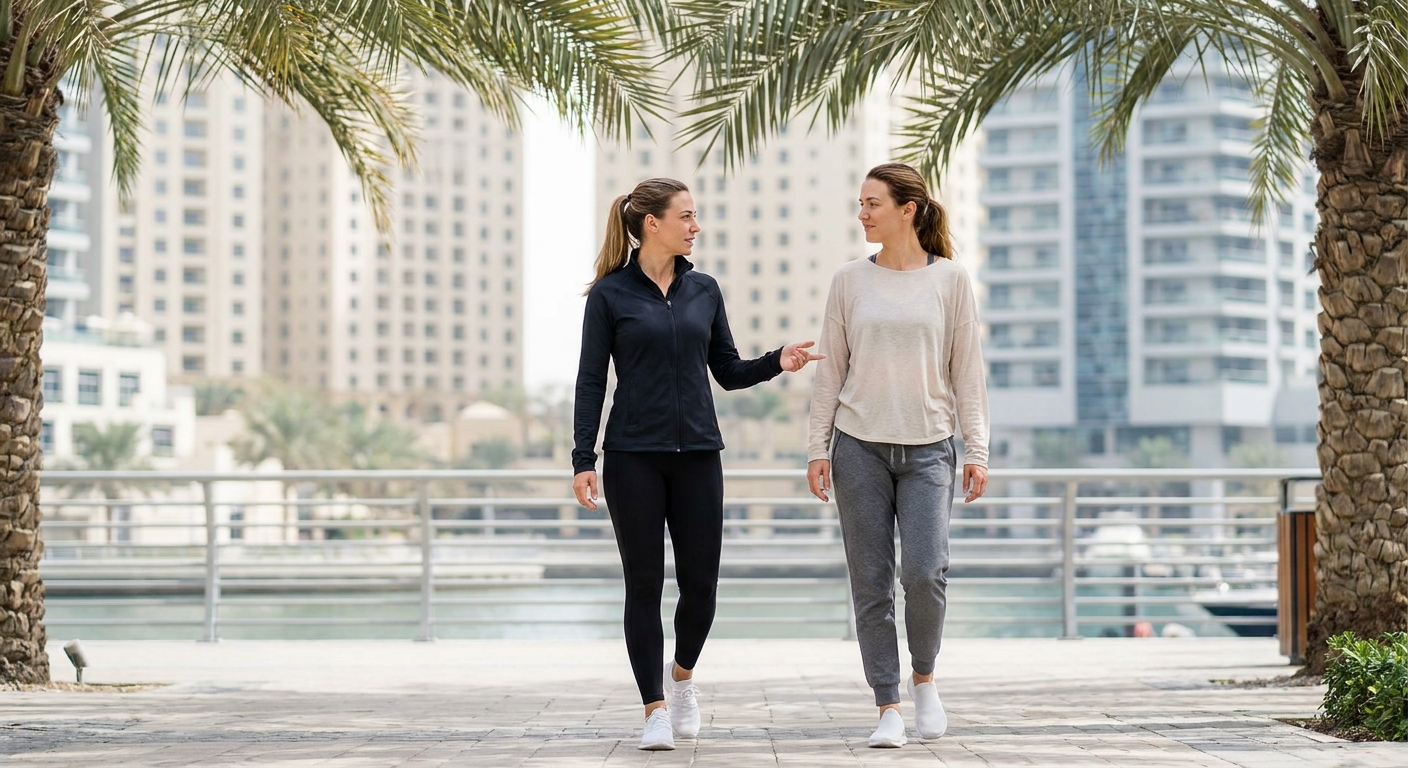
- Take short walks, five to ten minutes around your apartment or the hospital corridor, once or twice a day. That’s genuinely enough for now.
- Start gentle pelvic floor squeezes within a day or two if they’re pain free. Hold briefly, fully relax, don’t push through any discomfort.
- Sit tall and support your incision with a pillow when you cough, laugh, or feed. Your future self will thank you every time.
Guidance from Tommy’s supports short, frequent walks from early on, building up as you feel able. These first c section recovery exercises do more than pass time. They set the pace for everything that follows.

A Week-By-Week Return, Not a Fixed Date
Most obstetric and physiotherapy guidelines land on similar benchmarks. Low-impact structured work from six to eight weeks once you’re cleared, then high-impact from around twelve weeks. Here’s how a safe post c section workout actually progresses.
| Phase | Timeline | Usually safe once cleared |
|---|---|---|
| Early home | Weeks 0 to 2 | Breathing, ankle pumps, short walks, gentle pelvic floor holds |
| Rebuild | Weeks 2 to 6 | Longer walks, posture work, light deep-core activation with the incision supported |
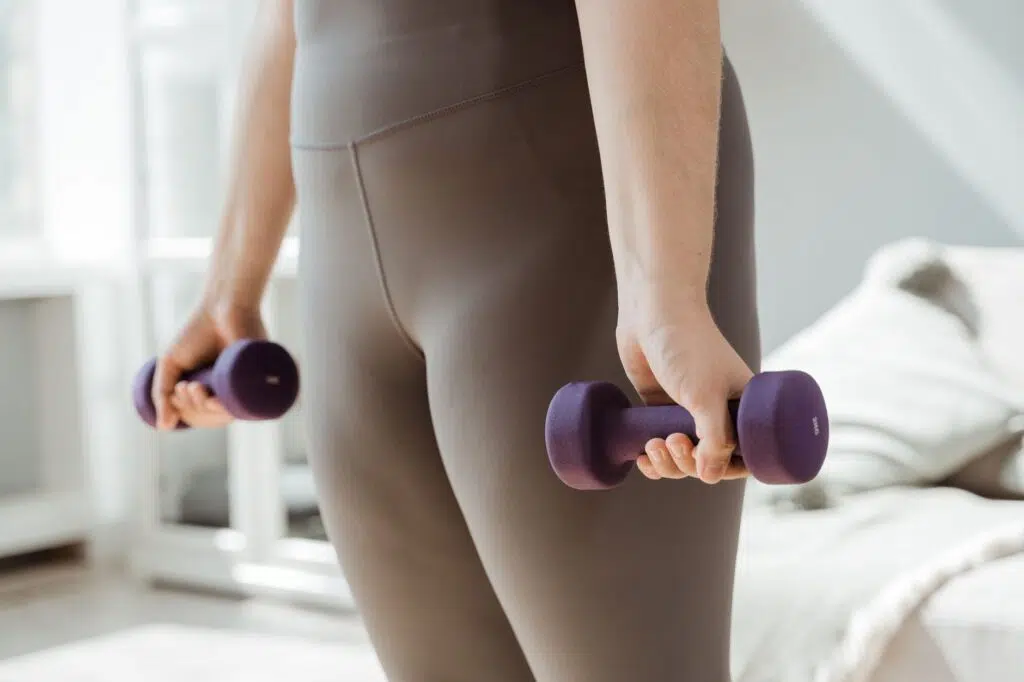
| Low-impact | Weeks 6 to 12 | Brisk walking, cycling, gentle Pilates, light dumbbells, swimming once bleeding has stopped |
| Load and impact | Beyond 12 weeks | Running, heavier resistance, intervals, if there’s no leakage or pain |
A Cornerstone Physiotherapy guide frames recovery in phases like these rather than a single return date. Stay inside these ranges, and let your symptoms decide when to move up. Not your impatience. Once you’re past twelve weeks and symptom-free, a structured 12 week transformation program becomes a realistic next goal.
What to Skip While You Heal
Knowing what not to do matters as much as any workout plan. In the early weeks, a handful of common exercises put direct pressure on your incision and your recovering core. They’re just not worth the risk right now.
- Skip heavy lifting, anything heavier than your baby, for at least the first six weeks. Yes, that includes the grocery bags.
- Skip crunches, sit-ups, full front planks, leg raises, and bicycles. If you see doming along your midline, stop immediately. That’s your body telling you to back off.
- Skip twisting and sudden direction changes that tug on the internal and external stitches you can’t even see.
- Skip running, jumping, and HIIT until roughly twelve weeks. Longer if you leak or feel heavy when you move.
- Skip swimming until the bleeding, called lochia, has fully stopped and the incision has healed. Infection risk is real and entirely avoidable.
Planks work later, once your core can brace without doming. Earn them then. Skip them now and your abdominal wall knits back stronger than if you’d forced it too soon.
Who’s Ready to Train, and Who Should Wait
Working out after c section isn’t the same for every woman. Two people at the exact same six-week mark can need completely different plans. Honest coaching means saying that out loud, not just telling everyone they’re ready.
- You’re likely ready for gentle structured work if you’re cleared, pain free, no longer bleeding, and can walk 30 minutes comfortably.
- Wait longer if your incision still aches, you had an infection or a complicated repair, or you feel pressure and heaviness in your pelvic floor.
- See a women’s health physiotherapist first if you notice leaking, a visible gap or doming in your abdomen, or ongoing back pain that won’t settle.
This guide fits a healthy recovery with a clear medical sign-off. It’s not for anyone still managing complications. If that’s you, rehab comes before training. A good coach will tell you to wait rather than sell you a session. If they don’t, find a different coach. When you’re genuinely ready, book a trial session with a coach who will be honest about exactly where you should start.
Building It Around a Dubai Calendar
Recovery is hard enough without a 7pm crawl down SZR with a newborn in a car seat. For mums in Downtown, Business Bay, or the Marina, the setup you choose is what decides whether you actually stay consistent. And in Dubai’s 45-degree summer, commuting to a gym with a baby is genuinely a non-starter.
Works well
- With a personal trainer in Dubai who comes to you, there’s zero commute with a newborn in tow.
- Sessions flex around feeds, naps, and the work calls that never land when you actually planned them to.
- A postpartum-aware coach scales every movement to your incision and your current stage, not some generic week-six protocol pulled from the internet.
Worth knowing
- You still need real medical clearance first. A trainer is never a substitute for your doctor.
- Home space and equipment can be limited compared to a full commercial gym.
- Postnatal coaching is a specialist skill. Vet certifications carefully before you commit to anything.
A qualified postnatal personal trainer in Dubai can run a focused 30 to 45 minute session in your tower gym or villa, built around your feeds and naps. When it’s 45 degrees outside, that air-conditioned setup is often the difference between three sessions a week and none.
When to Stop and Call Your Doctor
Some warning signs are non-negotiable. If any of these show up during or after a session, stop and get medical review the same day. Don’t wait until tomorrow.
- Bleeding that increases when you move.
- Incision pain, redness, swelling, or discharge.
- Fever, calf pain or swelling, chest pain, or shortness of breath.
- Pelvic heaviness, bulging, or urine leaking with impact or lifting.
The Mayo Clinic advises checking with your provider before you start or step up exercise after a C section, especially after a complicated delivery. That one conversation protects everything you’re rebuilding.
The bottom line: Heal first, then train by symptoms, not by a date on the calendar. Walk and breathe in the early days. Add low-impact work once you’re cleared at six to eight weeks. Leave high-impact training until around twelve. Done in that order, exercise after c section gives you the best chance of a smooth rebuild, and the clearest path forward if complications do arise.